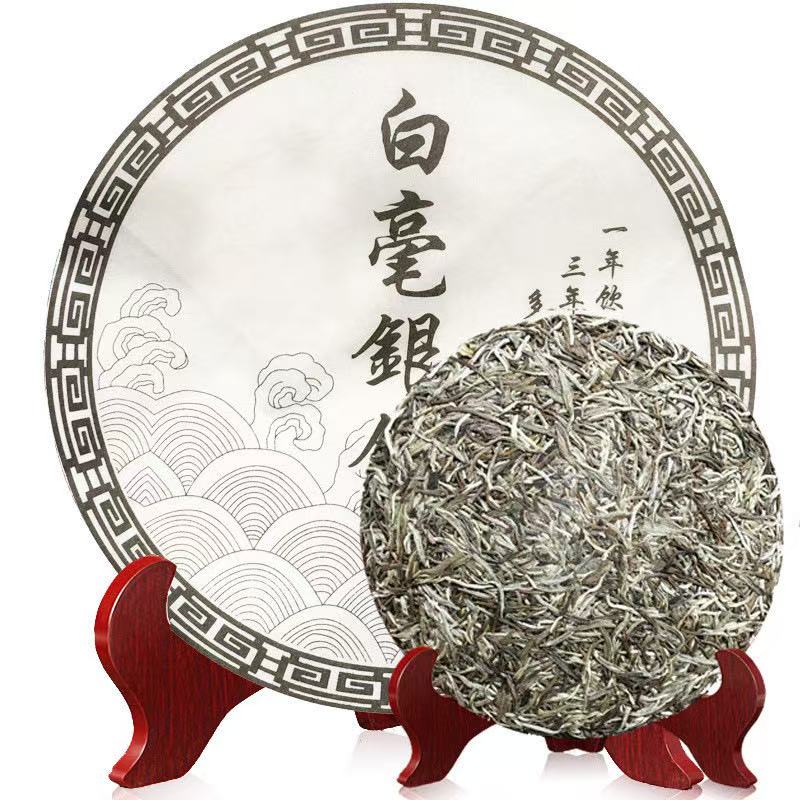
This Shou Mei grade white tea has large leaves and furry buds, with a picking standard of one bud and three to four leaves. Its sweet taste has hints of wildflowers, peaches, ripe fruits, spices, dry biscuits, and a delicate medicinal aftertaste. It has a beautiful, light golden soup with a delicate, sweet perfume. Shou Mei: A Misunderstood Gem Many people often assume that Shou Mei tea is of the lowest quality, mainly because it is cheap and the lowest grade. Nevertheless, affordability and grade don’t necessarily imply that it lacks quality. Each white tea grade represents a different product, and quality should be assessed within the same grade type rather than across different grades. Comparing the quality of Silver Needle with that of Shou Mei is pointless, as their basic characteristics are completely different. For more information about white tea grades, you may read the section below. A good-quality Shou Mei features a mellow creaminess and a rich flavor, with a delightful fruity aroma. These characteristics make it perfect for people new to white tea. Moreover, the later timing of its harvest allows Shou Mei to develop more nutrients and sugars, making it an ideal tea for aging. Additionally, it contains less caffeine compared to the mostly bud-based white teas. White Tea Grades Chinese white tea is traditionally produced in Fuding County, located in the Fujian region. This area is known for its various grades of white tea, which are Baihao Yinzhen (Silver Needle), Bai Mu Dan (White Peony), Gong Mei, and Shou Mei. Baihao Yinzhen is the highest grade and is made exclusively from silvery buds. The second grade, Bai Mu Dan, is produced using a standard that includes one silver bud and one to two leaves. Both of these teas feature a fresh and sweet taste with a delicate floral aroma from the first grade and a more intense aroma from the second one. The soup color for Baihao Yinzhen is a delicate yellow, while Bai Mu Dan presents a lovely apricot yellow hue. Next is Gong Mei white tea, which is harvested later than Bai Mu Dan. Its picking standard consists of one bud and two to three leaves. To better differentiate between these two grades, a recent regulation established in 2017 specifies that Gong Mei must be made from the Qunti tea plant cultivar, while Bai Mu Dan can also come from other cultivars, such as Da Bai and Da Hao. The leaves of Gong Mei are larger compared to those of Bai Mu Dan, and it has a bright yellow soup with a mellow, fruity, and sweet taste. The final grade is Shou Mei white tea, which is primarily made from leaves with fewer buds. It is harvested in April, late August, or September. The leaves are larger and darker brownish in color, resulting in a rich taste with an intense fruity aroma.