
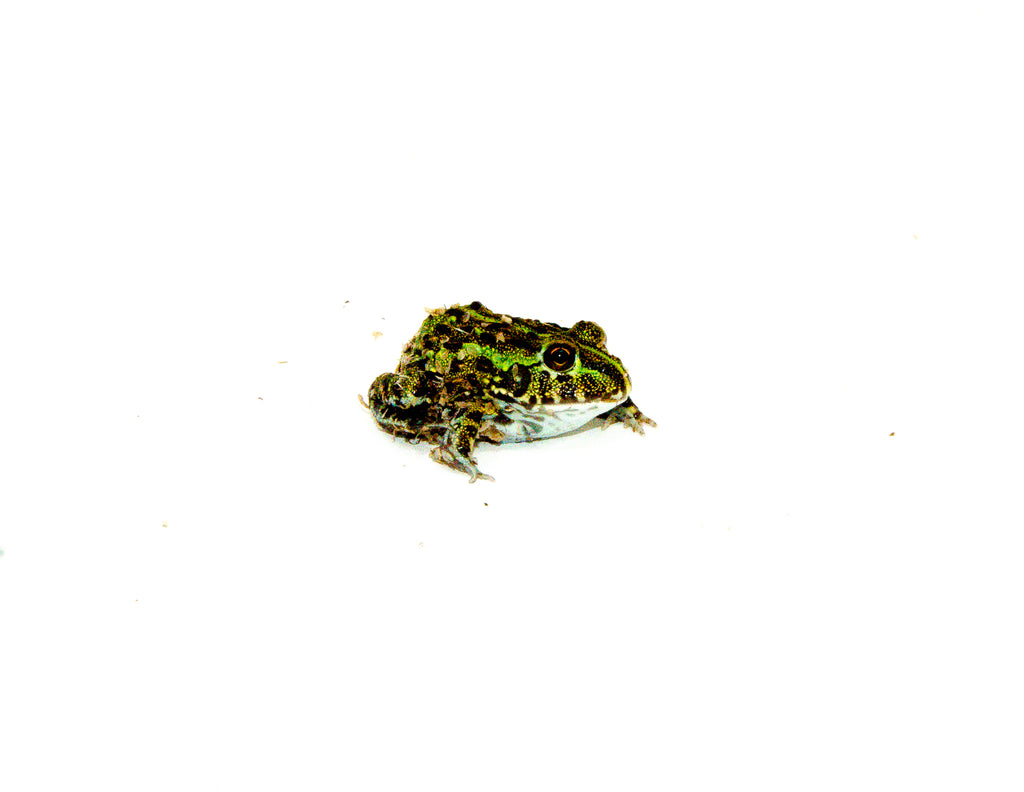
african pixie frog baby (pyxicephalus adspersus)
$ 26.99
African Pixie Frog Baby (Pyxicephalus adspersus): A Bold and Hungry Little Giant The African pixie frog baby (Pyxicephalus adspersus) may start off small, but don’t let its size fool you—this little amphibian has a massive appetite and a bold personality to match. Also known as the African bullfrog, it’s one of the largest frog species in the world, making its babies a fascinating choice for amphibian enthusiasts. Whether you’re a seasoned herpetologist or just starting in the hobby, raising a healthy African pixie frog baby (Pyxicephalus adspersus) can be a rewarding and educational experience. Appearance and Growth An African pixie frog baby ) typically measures around 1.5 to 2 inches at birth. These babies are olive green to brownish in color, often with darker markings across the body and a lighter belly. As they grow, their robust body shape, large head, and powerful limbs start to develop quickly. What makes this species especially interesting is the rapid growth rate. With proper feeding and care, a male can reach over 9 inches and weigh more than 2 pounds, while females remain smaller. Their transformation from a chunky baby into a powerful adult is nothing short of impressive. Housing and Habitat Caring for an African pixie frog baby starts with creating a secure and comfortable environment. A 10-gallon terrarium is suitable at the baby stage but will need to be upgraded as your frog grows. A simple setup with a moisture-retentive substrate like coconut fiber or topsoil is ideal, as these frogs love to burrow. Humidity should be maintained between 60% and 80%, with daytime temperatures between 78°F and 85°F. A shallow water dish is essential for soaking, but always ensure your frog can easily enter and exit the dish to prevent drowning. Because they’re known to eat anything that moves—including cage mates—it’s best to house baby frogs individually. Feeding Your Frog Feeding an African pixie frog baby (Pyxicephalus adspersus) is a fun (and often messy) process. These frogs are aggressive eaters and will gladly pounce on crickets, dubia roaches, mealworms, and even small pinky mice as they grow. For babies, offer appropriately sized prey daily. Dust insects with calcium powder 3–4 times per week and a multivitamin once a week to ensure balanced nutrition. Always supervise feeding time to avoid accidental injury to your frog. Behavior and Temperament Despite their adorable appearance, African pixie frog babies (Pyxicephalus adspersus) are known for being bold and territorial. They may puff up, open their mouths, or even lunge if they feel threatened. While they can become more tolerant of their keeper with regular care, they are not considered a “handling” species and do best when admired rather than touched. Their burrowing behavior and explosive feeding response make them a joy to watch. These frogs are more active at night and spend much of the day partially buried in substrate. Health and Lifespan With good care, an African pixie frog baby (Pyxicephalus adspersus) can live up to 15–20 years. Key to their longevity is proper husbandry—maintaining a clean environment, offering a varied diet, and minimizing stress. Look out for signs of illness such as weight loss, lethargy, swollen limbs, or cloudy eyes. Regular cleaning, fresh water, and high-quality food are your best defenses against health issues. Where to Buy If you’re ready to add an African pixie frog baby (Pyxicephalus adspersus) to your collection, it’s important to choose a reputable breeder or exotic pet supplier. At OneStopReptileShop.com, we provide healthy, captive-bred specimens along with expert advice, feeding supplies, and enclosure kits designed for these powerful amphibians. Final Thoughts The African pixie frog baby (Pyxicephalus adspersus) may be tiny now, but it’s on the path to becoming a beast of a frog with a big appetite and even bigger personality. With proper care, they make an excellent pet for anyone fascinated by the incredible diversity of amphibians. Check out our available baby frogs and care products today at OneStopReptileShop.com and bring home one of the most impressive frogs in the hobby!
Customers also bought
-
 $ 99.79 Select options This product has multiple variants. The options may be chosen on the product page
 -
 $ 95.13 Select options This product has multiple variants. The options may be chosen on the product page